
So, it’s time for you to get a new fence, and you’ve got a few quotes lined up. Now what? Most people have no idea what to actually ask, and the contractors who aren’t worth hiring are counting on that.
We’ve heard a lot of the same stories. A guy came out, gave a number, took the deposit, and then nothing for two weeks. When they got the final bill, it was $600 more than expected. The work looked fine from the street, but the posts were already wobbling by spring.
This happens more than people talk about. And the good news is that it’s almost always avoidable.
It doesn’t have to go that way. So today, we’re walking you through exactly what to ask before a single post goes in the ground.
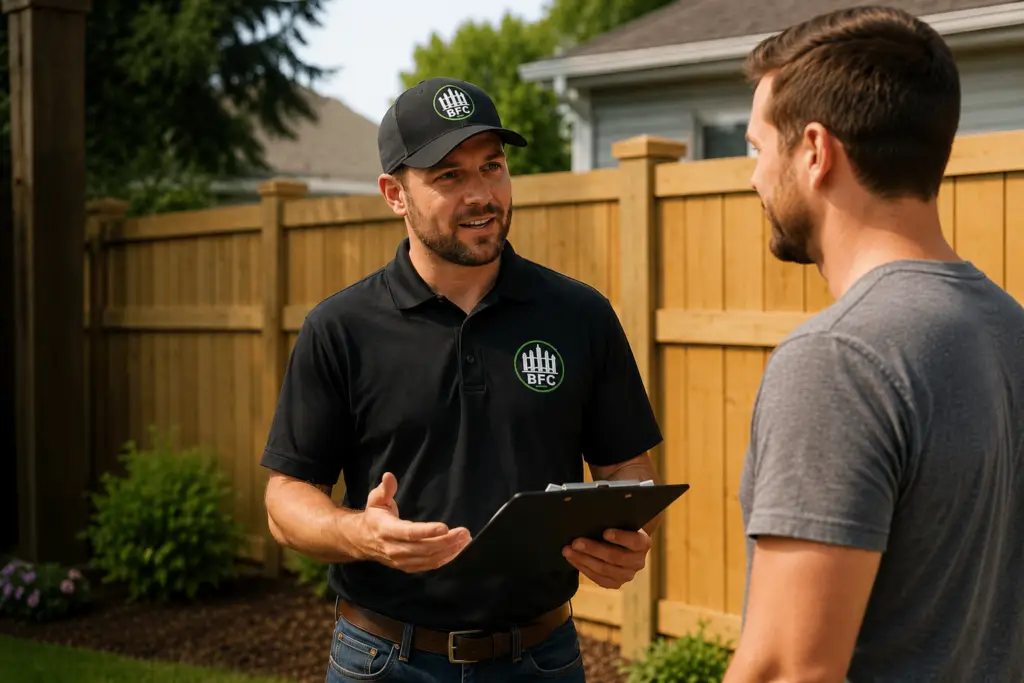
Are You Licensed and Insured?
Start here. Every time.
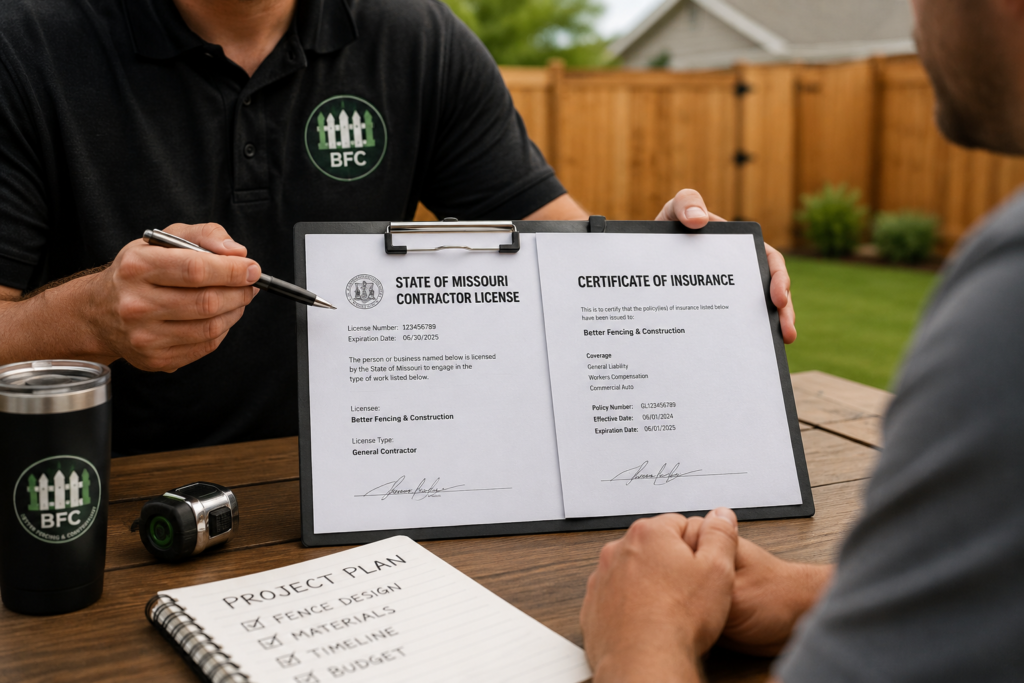
You might not understand why this is so important, but being licensed means your contractor has met the requirements set by your state and county for doing this kind of work. Insurance means that if someone gets hurt on your property or if something goes wrong, you’re not the one holding the bill.
Ask to see proof of both—actual documentation. Any contractor who pushes back or gets defensive isn’t someone you want on your property.
This one question alone will filter out a significant portion of people who show up with a truck and a business card but nothing else.
Can You Give Me a Written Estimate—Line by Line?
Being in this business, we’ve seen it all. A number on a napkin, or a Post-it note, doesn’t count.
A real estimate breaks down what you’re getting: how many linear feet of fence, what materials, how many gates, what the labor covers, and what the total is. It should be specific enough that you could hand it to another contractor and they’d know exactly what work was agreed upon.
If someone gives you a round number without any detail, ask where it came from. Remember… you’re not being difficult; you’re being a responsible homeowner. Any contract worth hiring will respect that.
Also, ask specifically: what would cause this number to go up? Unexpected rock, difficult soil, property line disputes, etc. All of these things are legitimate. You want to know upfront how they handle it, not find out when the invoice arrives.
Who’s Actually Doing the Work?
This one often surprises people.
Some contractors sell a job and then hand it off to a subcontractor you’ve never met. And that’s not always a bad thing; plenty of good subs exist. But you should know who’s showing up to your yard, and the person you hired should be able to vouch for them directly.
Ask if the owner will be on-site. Ask who the crew is. Ask if the same people who start the job will finish it.
There’s a massive difference between a company where the owner shows up and works alongside the crew, and one where the owner is closing the next sale while strangers are in your backyard. Both can produce good results. But you should know what you’re getting.
What Does Your Timeline Look Like?
It’s also important to get a start date and an estimated finish date in writing.
Projects that ‘should take two to three days” have a way of stretching into two weeks when a contractor is juggling four other jobs, and yours keeps getting pushed. This isn’t unique to fencing; it’s a known issue in every trade.
Ask how they handle delays. Ask what thier communication looks like while the job is in progress. Do they text you updates? Do you have to change them down?
A contractor who can answer these questions clearly has thought about it before. One who gets vague or waves it off probably hasn’t.
Do You Pull Permits When Required?
In most areas around the KC Northland, a fence permit is required depending on the height, material, and location. Clay County, Platte County, and individual cities each have thier own rules.
Some contractors skip this because it adds time and a small cost. It also puts the liability on you if something comes up later, during a sale, a dispute with a neighbor, or an insurance claim.
Ask your contractor directly: Is a permit needed for this job? If yes, who pulls it? The answer should be them, not you.
If they tell you it’s not needed and you’re not sure, call your city or county building department yourself. It takes five minutes, and it’s worth it.
What Happens If Something Goes Wrong After the Job Is Done?
First things first, nobody likes asking this question. It feels like you’re expecting a problem before the job even starts.
Ask anyway.
Does the contractor stand behind thier work? Is there a warranty on labor? What happens if a post shifts after a bad frost, or a gate starts dragging after six months?
The honest answer from a good contractor is something like: “Call me. I’ll come look at it.” They’re not going to promise a lifetime guarantee on a wood fence. Wood moves, weather happens, but they should be reachable and willing to make it right if something went sideways on thier end.
If the contractor doesn’t have a clear answer, or if the answer is some version of “all sales are final once we’re off the property,” you’ve learned something important.
One More Thing
The lowest estimate is not always the best deal.
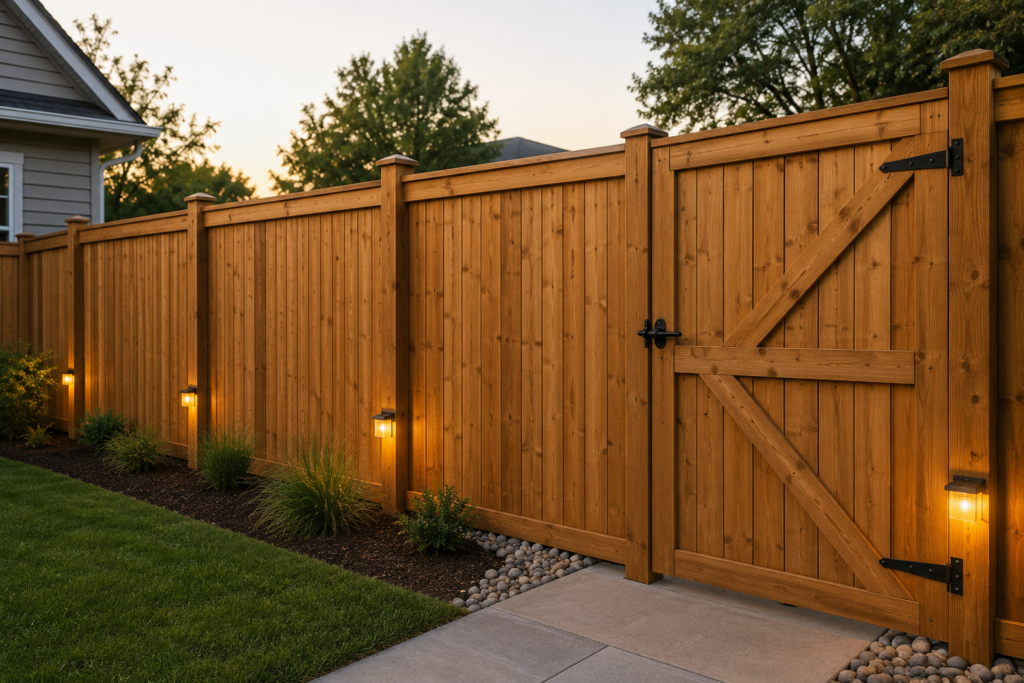
That’s not a sales pitch, it’s just true. A fence is a long-term investment. If the posts, footings, and gate hardware are done correctly, the fence should last 15 to 20 years. Done poorly, you’re looking at repairs in three.
Price matters. But it’s one factor, not the only one.
Ask your questions. Get your answers in writing. And hire someone who shows up, does what they said they’d do, and doesn’t disappear when you call.
That’s what good work looks like. It’s not complicated. It’s just not as common as it should be.
Great information!!